Posted: Wednesday, 21 Jan, 2026, 04:39 IST
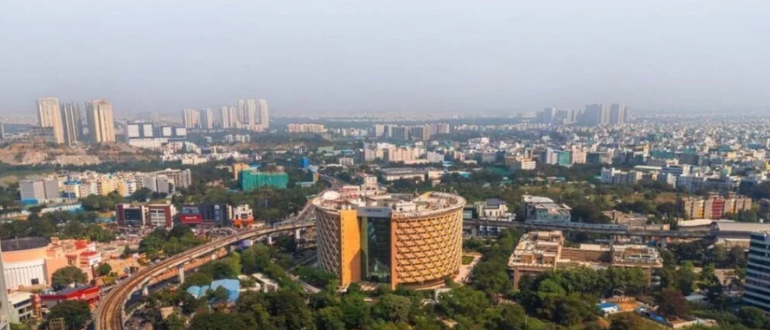
India’s start-up ecosystem is witnessing a significant shift, with Tier-2 and Tier-3 cities emerging as key hubs for innovation, investment, and entrepreneurial growth. Cost advantages, growing talent pools, and supportive government policies are attracting startups away from traditionally dominant metros. From AI-driven SaaS to industrial automation and GCC-led innovation, startups in these cities are no longer peripheral players but central to the nation’s tech growth story.
Jaipur Leads with Robust Government Support
Jaipur is emerging as a leading Tier-2 start-up hub, recording over 5,000 new company incorporations in 2025, including approximately 500 active startups. The city benefits from infrastructure like Mahindra World City, which supports IT and tech operations, and state-backed initiatives such as the iStart program, providing matching funds of up to Rs. 25 lakh under the BHAMASHAH Techno Fund.
The Rajasthan Global Capability Centre Policy 2025 complements these efforts by fostering innovation, enhancing infrastructure, and creating a skilled workforce. Startups like MEDHINI by Arficus, GirnarSOFT, HabileLabs, Akeo, and Electro IT Solutions are driving growth across AI, edtech, and fintech verticals.
Lucknow Gains Traction with StartInUP Policy
Lucknow has become a fast-growing North Indian start-up hub, home to roughly 1,700–1,800 active startups. The city’s growth is fueled by the IT City development and the state’s StartInUP policy, which offers sustenance allowances up to Rs. 15,000 per month, seed funding, marketing support, prototype funding, and plans for 100 incubators across Uttar Pradesh.
Active companies in Lucknow include Arficus, Webllisto Technologies, and Brainsmiths Labs. These startups benefit from government-led initiatives that combine financial assistance with infrastructural and mentorship support, making the city a competitive alternative to costlier Tier-1 hubs.
Indore: Super Corridor Spurs High-Tech Startups
Indore is rapidly developing as a high-tech start-up hub, supported by the Super Corridor parks and a yearly influx of 20,000 STEM graduates. In 2025 alone, five new startups were founded, benefiting from Madhya Pradesh’s Startup Policy 2019/2022. The policy provides seed funds up to Rs. 10 crore, pre-seed prizes, 100% incubator growth support, and MSME incentives, enabling prototype development and scaling opportunities.
Coimbatore and Kochi Foster Innovation Ecosystems
In Coimbatore, more than 250 startups operate out of TIDEL Park, supported by a workforce of over 43,000 tech professionals. State-backed programs such as the Coimbatore Innovation and Business Incubator (CIBI) under DST’s NIDHI-TBI provide grants, entrepreneurship-in-residence programs, and prototype development support. The city’s startup count has jumped from 271 in 2020 to 1,350 in 2024, representing roughly 15% of Tamil Nadu’s overall start-up ecosystem.
Kochi is emerging as a hub for GCC and AI-driven startups, with over 200 active companies supported through the Kerala Startup Mission. KSUM offers seed funding up to Rs. 10 lakh at 9% interest, innovation grants, 18-month incubation cohorts, Fund of Funds access, and mentoring for idea validation.
Bhubaneswar and Chandigarh: Supporting Tech and Women Entrepreneurs
Bhubaneswar hosts 250+ startups within Infovalley SEZ, supported by Odisha’s Startup Policy 2022. With 31,000 STEM graduates, the city offers financial support, tax incentives, simplified registration, mentorship, hackathons, and prototype funding.
Chandigarh-Mohali-Panchkula has emerged as a vibrant tech cluster, home to 633 DPIIT-recognised startups and more than 500 within Rajiv Gandhi IT Park. The Chandigarh Startup Policy 2025 supports early-stage startups with idea grants of Rs. 1–2 lakh, seed grants up to Rs. 7 lakh for women-led businesses, commercialization grants up to Rs. 12 lakh, rental support, and patent reimbursements.
Government Incentives and Talent Drive Growth
Across these Tier-2 cities, government schemes play a pivotal role in catalyzing growth. Seed funds, tax breaks, incubator support, and innovation grants make starting up more feasible while reducing capital barriers. Coupled with large pools of skilled graduates and relatively lower operational costs, these cities are attracting talent and investment away from traditional Tier-1 metros.
Industries ranging from agritech and edtech to fintech, deep tech, and industrial automation are increasingly concentrated in these emerging hubs. Startups are leveraging IT parks, co-working spaces, and innovation-friendly policies to scale rapidly and attract investment, creating vibrant ecosystems beyond major metropolitan centres.
Tier-2 Cities Fuel India’s Innovation and Investment Trends
The rise of Tier-2 cities reflects a structural shift in India’s start-up and investment landscape. More than half of new incorporations since 2020 are from these cities, driven by affordability, talent, and government backing. Enhanced connectivity, digital solutions, and infrastructure improvements are accelerating growth across sectors, from healthtech to AI-driven platforms.
By balancing cost-efficiency, policy support, and access to talent, Tier-2 and Tier-3 cities are not just alternative hubs, they are becoming central to India’s vision of a “Viksit Bharat” by 2047. With startups driving employment, innovation, and investment, these cities are charting a new course for India’s entrepreneurial ecosystem.
Tier-2 cities in India are experiencing rapid growth due to improved infrastructure, lower operational costs, better quality of life, expanding digital connectivity, government startup initiatives, and increasing investor confidence. Cities like Indore, Jaipur, Coimbatore, Surat, and Lucknow are attracting startups, technology companies, and real estate investments.
Indore has established itself as a leading startup destination because of its thriving IT ecosystem, Smart City development, educational institutions, skilled workforce, modern infrastructure, and growing commercial corridors like Super Corridor Indore. These factors make the city attractive for entrepreneurs, investors, and businesses.
Many investors are exploring Tier-2 cities because they often offer lower property prices, higher growth potential, improving infrastructure, and better long-term returns. As business expansion and urban development continue, these cities are becoming strong alternatives to traditional metropolitan investment markets.
Technology, fintech, healthcare, education, logistics, manufacturing, AI, SaaS, e-commerce, agritech, and clean energy are among the fastest-growing sectors contributing to the startup ecosystem in Tier-2 cities across India.
Super Corridor Indore offers excellent connectivity to the airport, IT parks, educational institutions, metro infrastructure, and premium commercial developments. The presence of leading companies and upcoming business hubs has strengthened its position as one of the city's most promising investment corridors.
The Indore real estate market continues to grow due to Smart City initiatives, expanding IT infrastructure, metro connectivity, industrial development, commercial projects, and rising demand for residential as well as commercial properties. These factors create strong long-term investment opportunities.
As startups and technology companies expand, demand increases for office spaces, commercial properties, rental housing, premium apartments, and integrated townships. This directly supports the growth of the real estate market in Tier-2 cities, including Indore.
Several Tier-2 cities including Indore, Jaipur, Coimbatore, Surat, Chandigarh, Bhubaneswar, Kochi, Nagpur, and Lucknow are witnessing significant growth in startup activity, infrastructure development, commercial expansion, and real estate investment opportunities.
Yes. Commercial property investment in Indore is gaining momentum because of increasing business activity, startup growth, IT expansion, modern office developments, and rising demand for retail and co-working spaces, particularly around Super Corridor and other emerging business districts.
The future of India's Tier-2 cities looks highly promising as infrastructure, innovation, startup funding, digital transformation, and government support continue to accelerate growth. Cities like Indore are expected to play an increasingly important role in India's startup ecosystem, business expansion, and real estate investment market.
Own a premium 2/3/4 BHK apartment in one of the fastest-growing locations of Indore — with modern amenities and excellent connectivity to IT hubs, educational institutions, and commercial zones.


 Request A Callback