Posted: February 23, 2026
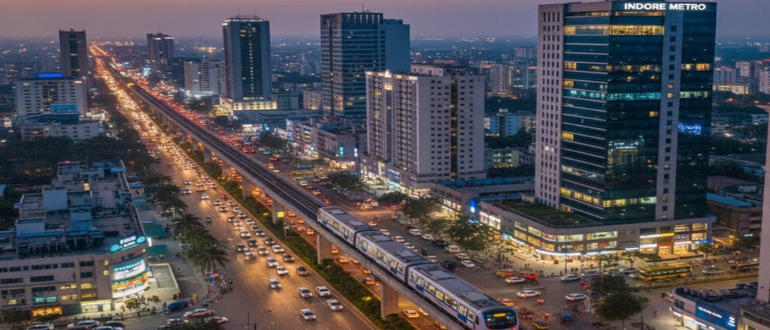
Indore’s Super Corridor isn’t just a stretch of asphalt anymore—it’s where the city’s future is quietly taking shape. What started as a planning sketch has grown into a full-blown urban spine, with tech campuses, metro stations, and residential towers rising in sync. Walk through it today, and you’ll feel the shift: the buzz of IT parks, the hum of commercial spaces, and the rhythm of gated communities designed for real lives—not just investment brochures.
The metro is changing everything. Phase 1 now links the airport to Vijay Nagar via Rajwada, turning commutes into lifestyle upgrades. Buyers aren’t just asking about square footage—they’re asking how far the nearest station is, whether there’s last-mile access, and if the layout supports everyday ease.
Indore’s clean-city reputation isn’t just civic pride—it’s become a trust signal for NRIs and institutional investors. That trust is translating into real demand in pockets like Rau and Nipania, where proximity to TCS and Infosys campuses is driving both rentals and resale interest.
Developers say the market has matured. Plot-led speculation is giving way to lifestyle-driven choices. Gated enclaves with green buffers, EV stations, and community infrastructure are now the baseline. And with value appreciation crossing 40% in some pockets over the last two years, the Super Corridor isn’t just expanding—it’s setting the pace.
Indore’s upcoming metro isn’t just changing how people move—it’s changing where they choose to live, invest, and build. With Phase 1 set to partially roll out by June 2025, the city’s real estate pulse is already shifting. Here’s how:
Indore’s clean-city reputation isn’t just a civic milestone—it’s a mood. For NRIs and institutional investors, the city’s spotless roads, efficient waste systems, and consistent top rankings in livability signal something rare in Indian urbanism: reliability. It’s a place that feels cared for, and that feeling is translating into real estate confidence.
Across the Super Corridor, that trust is taking shape in gated communities that go beyond the basics. Clubhouses, EV charging stations, landscaped buffers, and walkable layouts aren’t just selling points—they’re expectations. Buyers aren’t asking if these features exist; they’re asking how well they’re integrated. With the metro expanding and IT campuses drawing talent, Indore is starting to feel less like a Tier-2 city and more like a lifestyle destination.
Micro-markets like Rau and Nipania are leading the charge. Rental yields here hover between 4–6%, and resale interest is climbing steadily. These aren’t just numbers—they’re signals of a city in sync with investor sentiment. For many NRIs, buying in Indore isn’t just about returns—it’s about reconnecting with a hometown that finally feels ready to match their global expectations.
Walk through Indore’s Super Corridor today, and you’ll hear a different kind of conversation. It’s not about “how much land can I get?”—it’s “can I walk to the metro?” “Is there a park nearby?” “Will my kid have space to cycle safely?” The old plot-chasing mindset is fading. Buyers now want homes that fit their routines, not just their budgets.
Developers are responding. Integrated townships are no longer aspirational—they’re expected. Clubhouses, jogging tracks, EV charging stations, and green buffers aren’t add-ons; they’re part of the checklist. If a project doesn’t offer walkable access to a metro stop or basic community infrastructure, it’s off the radar.
This shift is especially visible among younger professionals and NRIs returning with global expectations. They’re not looking for land to hold—they’re looking for places to live. Places that feel safe, connected, and intuitive. Places where life flows easily from morning commute to evening downtime.
The Super Corridor, once dismissed as a speculative stretch, is now where people are putting down roots. It’s not just about square footage anymore—it’s about rhythm, belonging, and the kind of everyday ease that turns a house into a home.
Super Corridor is widely considered one of the best investment destinations in Indore due to its strategic location near Devi Ahilya Bai Holkar Airport, IT companies, educational institutions, metro connectivity, and upcoming commercial developments. Other promising investment locations include Vijay Nagar, AB Road, Nipania, and Rau depending on your investment goals and budget.
Super Corridor offers excellent connectivity, proximity to the airport, IT parks, proposed metro stations, premium residential townships, commercial developments, and continuous infrastructure expansion. These factors make it one of the fastest-growing real estate corridors in Central India.
Super Corridor has consistently shown strong appreciation due to rapid infrastructure growth. Vijay Nagar continues to remain a premium location, while Nipania and Rau are emerging as attractive investment destinations with significant future growth potential.
Yes. Indore remains one of India's fastest-growing Tier-2 cities. Continuous infrastructure development, industrial expansion, IT investments, metro connectivity, and increasing housing demand make the city a favorable destination for long-term property investment.
For premium apartments, Vijay Nagar and Super Corridor are excellent choices. Buyers looking for affordable housing can consider Rau, while families often prefer Nipania due to its schools, hospitals, shopping centers, and residential environment.
Super Corridor, Vijay Nagar, and AB Road generate healthy rental demand because of nearby IT companies, educational institutions, hospitals, and commercial offices. These locations attract working professionals, students, and business executives throughout the year.
Absolutely. Super Corridor offers a wide range of residential options, including affordable apartments, premium flats, villas, and residential plots. Excellent connectivity and future appreciation make it an ideal location for first-time homebuyers.
Both locations have strong investment potential. Vijay Nagar is a well-established commercial and residential hub offering immediate lifestyle benefits, whereas Super Corridor provides greater long-term appreciation due to ongoing infrastructure and IT development.
Major infrastructure projects such as the Indore Metro, Super Corridor development, IT parks, smart city initiatives, road widening, commercial hubs, educational institutions, and healthcare facilities are significantly boosting property demand across the city.
Super Corridor remains one of the most preferred destinations for residential plots due to planned development, wide roads, excellent connectivity, and strong future appreciation. Rau and the AB Road corridor also offer attractive plot investment opportunities.
Vijay Nagar, Super Corridor, and Nipania offer premium residential projects with modern amenities, gated communities, landscaped gardens, clubhouses, shopping malls, schools, and excellent connectivity, making them ideal for luxury living.
Buyers should evaluate location, connectivity, infrastructure development, builder reputation, legal approvals, rental demand, future appreciation potential, nearby schools and hospitals, and overall lifestyle before making an investment decision.
Yes. Indore's strong economic growth, expanding employment opportunities, planned urban development, clean city ranking, and increasing demand for residential and commercial properties make it an excellent destination for long-term real estate investment.
Super Corridor is currently one of the fastest-growing residential corridors in Indore, followed by Rau and Nipania. These locations are witnessing continuous residential, commercial, and infrastructure development.
Start by defining your budget and investment objective. Compare different locations based on connectivity, future infrastructure projects, property prices, builder credibility, amenities, rental demand, and expected appreciation before making your final decision.
Own a premium 2/3/4 BHK apartment in one of the fastest-growing locations of Indore — with modern amenities and excellent connectivity to IT hubs, educational institutions, and commercial zones.


 Request A Callback